

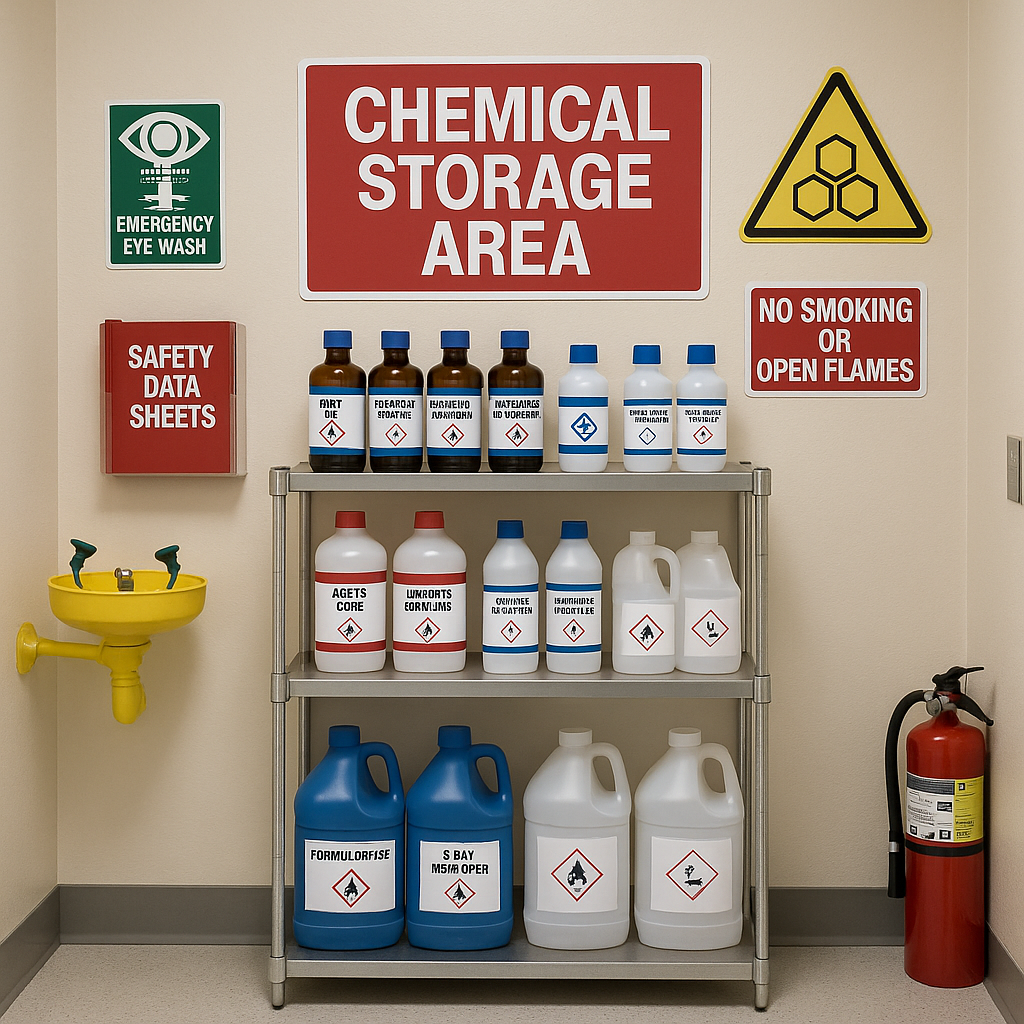
Ensuring chemical compliance in healthcare and commercial workplaces protects your staff, meets legal obligations, and creates a safer environment for everyone who enters your facility.
Understanding Your Legal Obligations For Chemical Safety
Chemical compliance in Australian workplaces is governed by comprehensive legislation designed to protect workers, visitors, and the environment. Under the Work Health and Safety (WHS) Act and the model WHS Regulations, businesses must identify all hazardous chemicals in their workplace, assess the risks these chemicals pose, and implement control measures to eliminate or minimise exposure. This extends to cleaning chemicals, sanitisers, disinfectants, industrial solvents, and any other substances that could cause harm to health or safety.
For facilities managers, operations managers, and business owners, understanding your duty of care is critical. You're required to ensure that all hazardous chemicals are properly managed throughout their lifecycle—from procurement and storage through to use and disposal. This includes maintaining up-to-date Safety Data Sheets (SDS) for every hazardous substance, ensuring workers have access to this information, and providing appropriate training. Non-compliance can result in significant penalties, workplace injuries, and reputational damage.
Beyond federal requirements, state-specific regulations through WorkSafe authorities add another layer of compliance. These bodies conduct workplace inspections, investigate incidents, and issue improvement or prohibition notices when safety standards aren't met. For businesses in food service, hospitality, healthcare, and industrial sectors, chemical compliance intersects with food safety standards and environmental protection laws, making a comprehensive understanding of your obligations essential to operating legally and safely.
Creating A Chemical Register And Safety Data Sheet System
A chemical register is your foundational tool for managing workplace chemical compliance. This comprehensive inventory documents every hazardous chemical used, stored, or generated at your facility, including cleaning products, sanitisers, degreasers, pest control substances, and industrial chemicals. Your register should include the product name, manufacturer details, quantity held, storage location, hazard classification, and a link to the current Safety Data Sheet (SDS). This living document needs regular updating whenever new chemicals are introduced or existing products are discontinued.
Safety Data Sheets provide critical information about each chemical's properties, hazards, safe handling procedures, first aid measures, and emergency response protocols. Australian regulations require that SDS documents follow the Globally Harmonised System (GHS) format and are readily accessible to all workers who may be exposed to the chemicals. Many businesses struggle with maintaining current SDS files—suppliers update formulations, and outdated sheets can contain incorrect safety information. Establishing a systematic review process, whether quarterly or bi-annually, ensures your SDS library remains compliant and useful.
Digital chemical management systems offer significant advantages over paper-based registers, providing centralised access, automatic update reminders, and integration with training records. However, even a well-maintained spreadsheet paired with a clearly organised physical or cloud-based SDS folder can meet compliance requirements effectively. The key is ensuring that your system is accessible 24/7 to workers and emergency responders, and that everyone knows how to locate and interpret the information when they need it. For businesses managing multiple sites or large inventories across packaging, cleaning, and industrial operations, investing in a robust chemical register system protects both your people and your business continuity.
Proper Storage, Labeling And Handling Procedures
Proper chemical storage prevents incidents, protects product integrity, and ensures regulatory compliance. Hazardous chemicals must be segregated according to their hazard class—storing incompatible substances together can trigger dangerous reactions, fires, or toxic gas releases. Acids must be separated from bases, oxidisers from flammable materials, and reactive substances isolated appropriately. Storage areas should be well-ventilated, secured against unauthorised access, and constructed with appropriate materials that won't corrode or degrade when exposed to the chemicals stored within.
All chemical containers must carry compliant labelling that clearly identifies the contents, hazard pictograms, signal words, hazard statements, and precautionary statements aligned with GHS requirements. When chemicals are decanted from their original containers into smaller working containers or spray bottles, these secondary containers must also be properly labelled—this is a common compliance gap found during WorkSafe inspections. Never rely on memory or assume that users will recognise a chemical by its appearance or smell; clear labelling is your first line of defence against misuse and exposure incidents.
Safe handling procedures extend beyond storage and labelling to include appropriate dispensing equipment, spill containment measures, and personal protective equipment (PPE). Chemical dispensers and dilution control systems not only improve safety by reducing direct contact with concentrated products but also deliver cost savings by preventing overuse. Spill kits should be strategically located near storage areas and include appropriate absorbents, neutralising agents, and containment materials specific to the chemicals in use. For businesses using a wide range of cleaning chemicals, foodsafe sanitisers, and industrial products, establishing clear standard operating procedures (SOPs) for each chemical or chemical group creates consistency and reduces the risk of incidents caused by improper handling.
Staff Training And Competency Requirements
Comprehensive chemical safety training is not just a regulatory requirement—it's an investment in workplace safety and operational efficiency. All workers who handle, store, or may be exposed to hazardous chemicals must receive appropriate instruction before commencing work and whenever new chemicals are introduced or work processes change. Training should cover hazard identification, safe handling procedures, correct use of PPE, emergency response protocols, and how to access and interpret Safety Data Sheets. Generic training isn't sufficient; your program needs to address the specific chemicals and scenarios relevant to your workplace.
Competency assessment ensures that training translates into safe workplace practices. This goes beyond attendance records to include practical demonstrations, supervised work periods, and regular refresher training. For facilities managers and operations managers responsible for cleaning services, industrial operations, or foodservice environments, documenting training and competency provides evidence of due diligence and helps identify knowledge gaps before they result in incidents. Consider role-specific training pathways—a kitchen staff member using foodsafe sanitisers has different training needs compared to a maintenance worker handling industrial degreasers or floor strippers.
Building a culture of chemical safety requires ongoing engagement beyond initial training sessions. Toolbox talks, safety bulletins addressing near-misses or new products, and accessible reference materials keep chemical safety front-of-mind. Encourage workers to ask questions, report concerns, and suggest improvements to chemical management procedures. For businesses partnering with suppliers who can provide product-specific training, technical support, and updated safety information, you gain an additional resource that strengthens your compliance program. At DEJ's, we support our customers with product guidance and safety information to help you maintain a safe, compliant workplace across your packaging, cleaning, and industrial supply needs.
Emergency Response Planning And Incident Management
Effective emergency response planning prepares your team to act quickly and correctly when chemical incidents occur—whether that's a small spill, a splash exposure, or a larger emergency. Your emergency plan should address foreseeable scenarios based on the chemicals you use, including specific first aid procedures, evacuation protocols, spill containment and cleanup procedures, and communication chains for notifying emergency services and management. Emergency contact information, including poison control centres and your chemical suppliers' emergency response numbers, should be prominently displayed and included in your chemical register.
Spill response equipment and procedures must be tailored to your chemical inventory. A spill kit appropriate for water-based cleaning products won't necessarily handle aggressive solvents, acids, or alkalis safely. Position spill kits in accessible locations near chemical storage and use areas, ensure they're regularly inspected and restocked, and train personnel on their correct use. For larger operations or those handling high-risk chemicals, consider designating and training a chemical emergency response team with specific responsibilities during incidents. Remember that some chemical emergencies require professional hazardous materials response—knowing when to evacuate and call emergency services is as important as knowing how to manage minor incidents internally.
Incident management extends beyond immediate response to include thorough investigation, documentation, and corrective action. Every chemical incident, regardless of severity, provides learning opportunities to prevent recurrence. Document what happened, identify root causes, and implement improvements to procedures, training, or equipment. Notify WorkSafe when required by legislation, and maintain records of all incidents and your response actions. Regular emergency drills and desktop exercises keep your team prepared and reveal gaps in your emergency plans before real incidents occur. For businesses across hospitality, facilities management, industrial operations, and healthcare, a robust chemical emergency response capability protects your people, minimises business disruption, and demonstrates your commitment to workplace safety excellence.